
Build Your First Habit Tracking System
Tend Team
Published February 15, 2026
7 min read
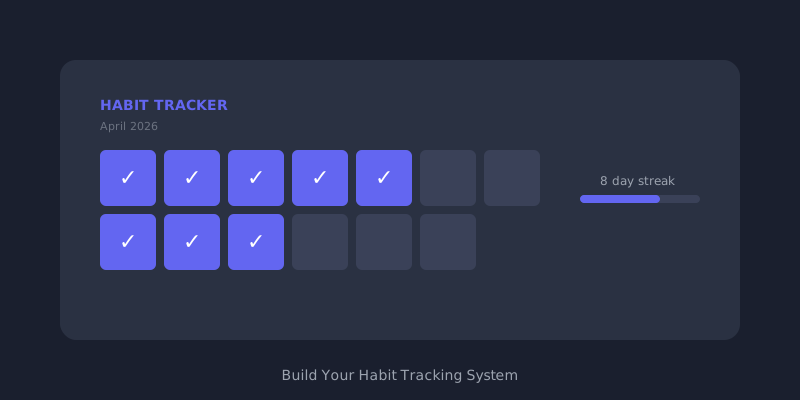
Most habit tracking attempts fail within the first month. Not because the person lacked willpower — but because the system was badly designed. Here is how to build one that works.
Why Most Systems Fail
The graveyard of abandoned habit trackers has a few common epitaphs:
Too many habits. Starting with ten habits is ambitious but counterproductive. The cognitive overhead of tracking many things, combined with the probability of missing at least one daily, virtually guarantees early abandonment.
No review cadence. Tracking without reviewing is meaningless. Without a regular check-in, you never learn from the data.
Habits too vague to evaluate. "Be healthier" cannot be tracked. "Walk 20 minutes before dinner" can.
Tool mismatch. Using a complex digital system when a simple paper notebook would serve better — or vice versa.
Choosing the Right Habits
Before you open a tracker, spend time choosing what to track.
Start With Identity
Ask: who do you want to become? Identify the behaviors that person performs daily. If you want to become a writer, a writer writes every day. Start with that behavior, not the outcome.
The Minimum Effective Dose
Choose the smallest version of the behavior that still moves the needle. Not "exercise for an hour" but "put on workout clothes." Not "read for 30 minutes" but "read one page." The minimum effective dose is the version you can complete even on your worst day.
Assess Your Current Habits
Before adding new habits, inventory what you already do. Most people have more consistent behaviors than they realize. These existing habits are anchors for new ones.
Action step: List five things you do every single day without fail. These are your habit anchors.
Paper vs. Digital: Choosing Your Tool
Both approaches work. The right choice depends on your situation.
When to Choose Paper
- You already keep a journal or planner
- You want something tactile and screen-free
- You are tracking five or fewer habits
- You prefer simplicity over features
When to Choose Digital
- You want reminders at specific times
- You travel frequently and need cross-device sync
- You want to see long-term trends and statistics
- You are tracking habits tied to data (steps, hours slept)
The Hybrid Approach
Some people use a paper tracker for daily logging and a digital tool for monthly review and analysis. This combines the tactile satisfaction of paper with the analytical power of digital visualization.
Setting Up Categories
Organize your habits into categories to maintain balance across life areas:
| Category | Focus |
|---|---|
| Body | Sleep, movement, nutrition, hydration |
| Mind | Learning, meditation, journaling, reading |
| Work | Deep work, skill practice, creative output |
| Connection | Relationships, communication, community |
Choose one to two habits per category at most when starting out. Four to six total habits is a healthy starting number.
Scheduling Reviews
The review is as important as the daily tracking. Without it, you are just collecting data — not using it.
Daily Check-in (2 minutes)
At the end of each day, mark your tracker and note anything unusual. What made today easy or hard?
Weekly Review (5 minutes)
Every Sunday, look at the past week:
- Which habits did you complete every day?
- Which did you miss? On which days?
- What pattern do you notice?
- Is anything too hard or too easy to be sustainable?
Monthly Review (15 minutes)
Once a month, assess the bigger picture:
- Which habits have become truly automatic?
- Which habits are you still forcing yourself to do?
- Is it time to add a new habit or increase difficulty?
- Are any habits no longer serving your goals?
Iterating Your System
A habit tracking system that never changes is a system that will eventually stop working.
Increase Difficulty Gradually
When a habit becomes too easy — when you complete it without any effort or thought — it is time to level up. Double the duration, increase the intensity, or add a related behavior.
Drop What Isn't Working
If you consistently skip a habit for three or more weeks despite genuine effort, the habit may be wrong for you right now. Drop it without guilt. Return to it when circumstances change.
Add Habits Incrementally
Add no more than one new habit per month. This slow pace feels frustrating but dramatically increases success rates. You are building a system, not rushing to a destination.
A well-designed habit tracking system is a long-term investment. The first month is the hardest because everything is new. By month three, reviewing your tracker will feel natural. By month six, many of your tracked habits will be so automatic you barely notice you are doing them.
That is the goal: behaviors so ingrained they no longer need tracking. But to get there, you have to track.
Why Most Systems Fail
Choosing the Right Habits
Start With Identity
The Minimum Effective Dose
Assess Your Current Habits
Paper vs. Digital: Choosing Your Tool
When to Choose Paper
When to Choose Digital
The Hybrid Approach
Setting Up Categories
Scheduling Reviews
Daily Check-in (2 minutes)
Weekly Review (5 minutes)
Monthly Review (15 minutes)
Iterating Your System
Increase Difficulty Gradually
Drop What Isn't Working
Add Habits Incrementally